
By Colin Young December 9, 2025
You know that feeling when you’ve just completed a massive project, validation is complete, and you’re ready to ship product? That sweet relief is immediately followed by the cold dread of realizing the FDA Pre-Approval Inspection (PAI) is looming…
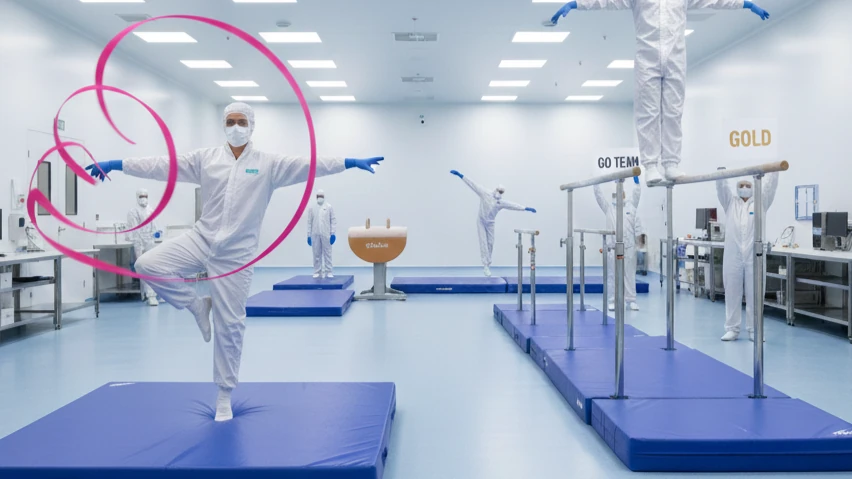
In aseptic manufacturing, the PAI isn’t just an inspection -it’s the regulatory World Series, the Aseptic Olympics- success demands a flawless routine without dropping any SOPs. The medal is market access; the judge is the FDA.
The Five Stages of PAI Prep
Denial
“They won’t look at old logbook, right?” (Spoiler: They will.)
Panic Cleaning
The three days where every obscure corner of the facility gets scrubbed with more rigor than a NASA launch pad. (If your Quality Unit isn’t sleeping on cots, are you even ready?)
SOP Speed-Dating
Forcing every operator to review 40 procedures in 48 hours. The goal is to make sure their answers sound vaguely consistent.
The Mock Inspection
The internal review that swiftly revealed a gap between the aspirational written SOP and the SOP executed in reality. (It hurts, but the honest feedback saves your bacon.)
Acceptance
Armed with data, training, and a freshly painted utility closet, you realize you’ve done everything humanly possible. Bring it on, FDA! (Maybe.)
How to Nail the Routine
For an aseptic PAI, the focus is relentless. Excellence in these three areas is non-negotiable:
Aseptic Process Simulation (Media Fills)
These are your final exam. Flawless execution and a clear trending history are critical. You need to prove the process is capable.
Data Integrity
Can you demonstrate that every critical piece of data (batch records, environmental monitoring, stability) meets the ALCOA+ criteria (Attributable, Legible, Original, Accurate, Contemporaneous, and Enduring?) Your audit trails must be cleaner than your cleanroom.
Personnel Training & Gowning
Your operators must be able to articulate why they do what they do, and their gowning technique must be impeccable. The inspector’s favorite show is watching your cleanroom entry process.
The PAI is tough, but it’s a testament to your system’s maturity. Prepare thoroughly, train your staff until they can recite SOPs in their sleep, and remember—they’re there to ensure patient safety, just like you are!
What’s the funniest (or most nerve-wracking) moment you’ve ever witnessed during an FDA PAI? Share your stories with us!